Integrate Salesforce with graph8
Overview
Integrating Salesforce with graph8 enables you to access and keep your data synchronized within both platforms, providing a unified view for your marketing and sales workflows.
Connect Salesforce to graph8
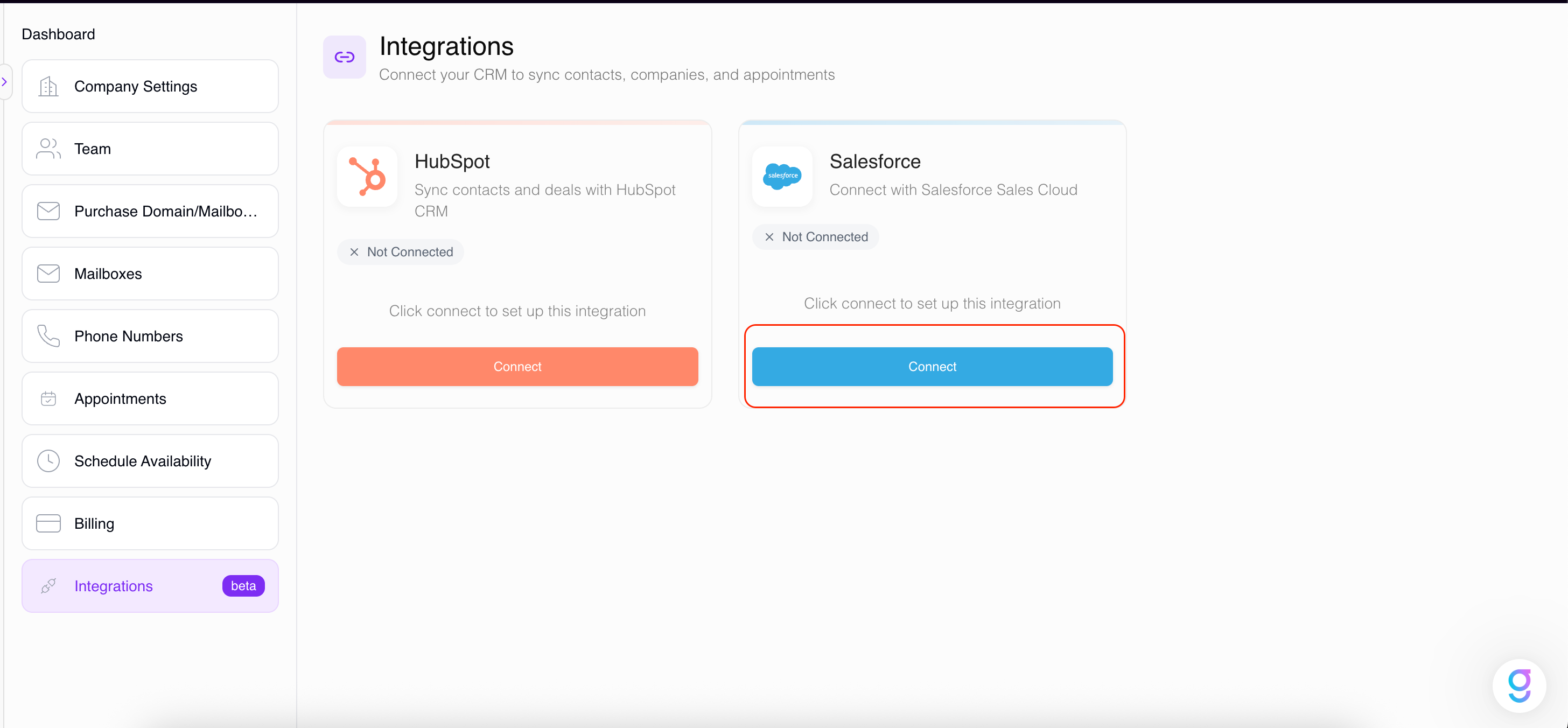
On the Integrations page, click Connect next to the Salesforce card (see Screenshot 1).
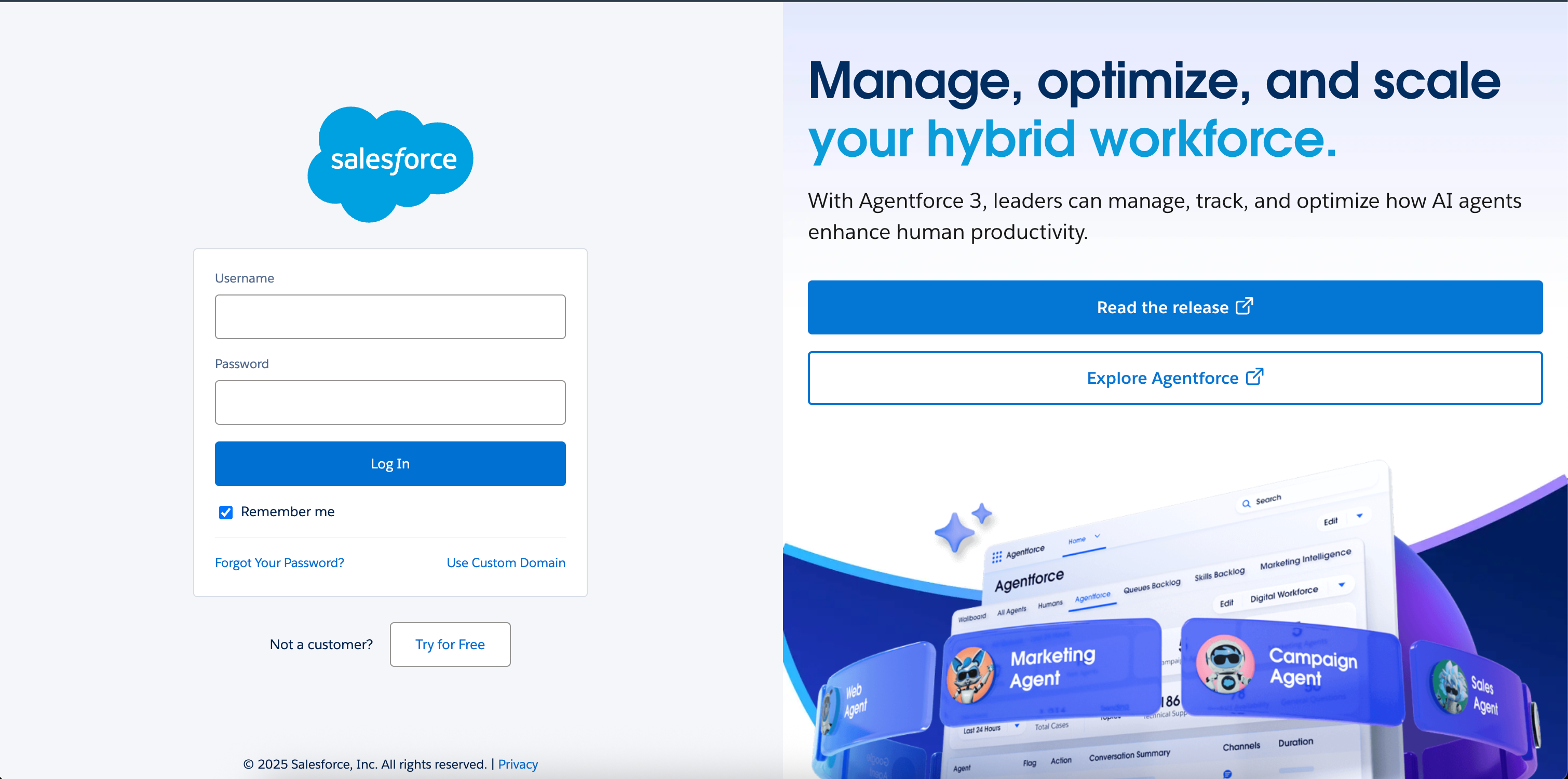
You will be directed to the Salesforce login page. Enter your Username and Password and click Log In (see Screenshot 2).
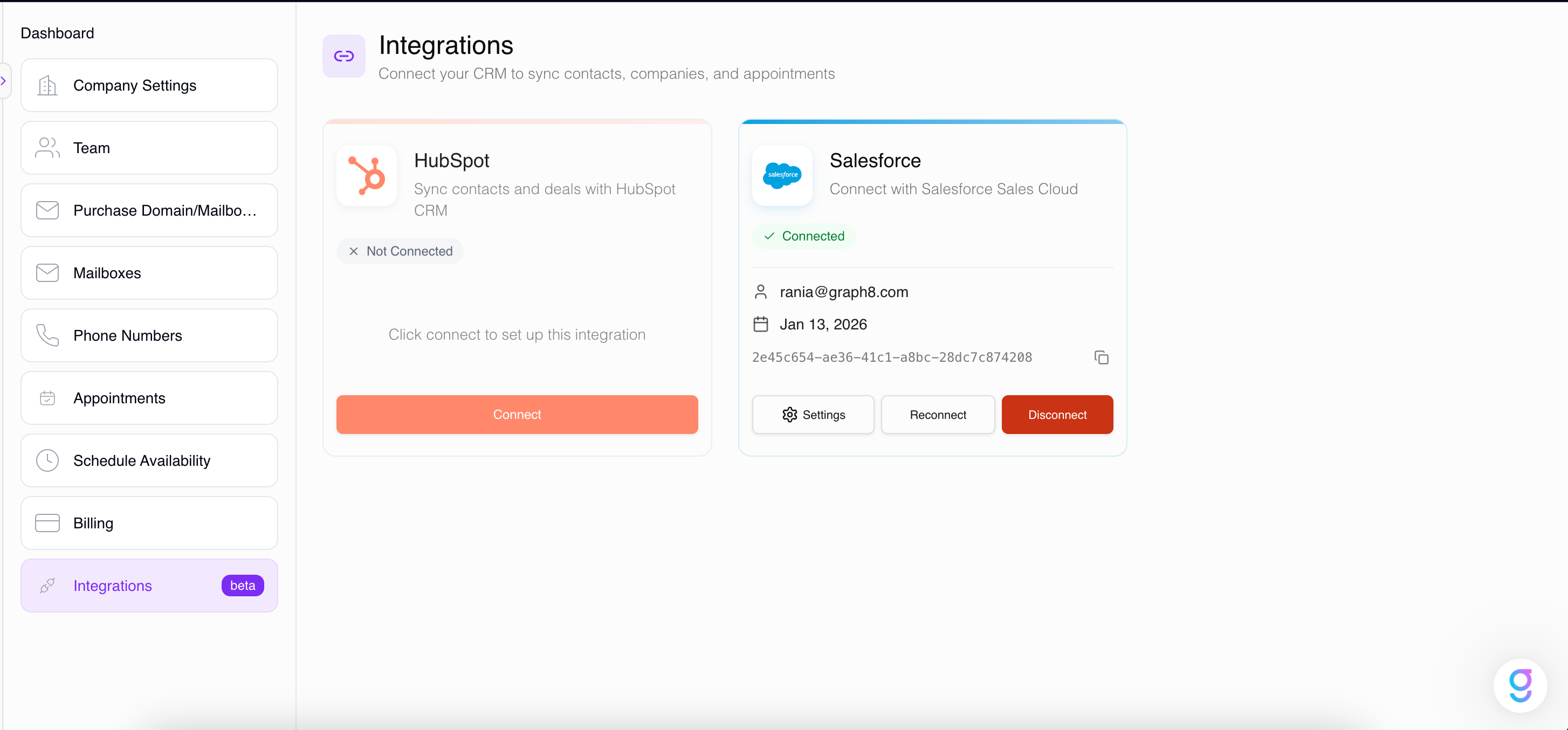
Once you successfully log in, you will be redirected back to graph8, and your Salesforce account will be successfully connected.
Note: If you run into any connection issues, please install this package in your Salesforce org first, then try connecting again:
Package install link: https://login.salesforce.com/packaging/installPackage.apexp?p0=04tfj000000AatT
For more details, refer to this Salesforce Help article:
Screenshot 1: Integrations Page - Connect Salesforce
Screenshot 2: Salesforce Login Screen
Salesforce Integration Settings
After successfully connecting your Salesforce account with graph8, you can configure the data synchronization flow. Click Settings on the connected Salesforce card to manage four key areas: Pull, Push, Fields Mapping, and Appointments.
1. Pull Settings (Salesforce → graph8)
The Pull settings allow you to bring records from Salesforce into graph8, supporting contacts and segments (known as Campaigns in Salesforce).
Automatic and Manual Sync
Enable Automatic Sync: Toggle this on to have all new and updated Salesforce records automatically pulled into graph8 every 30 minutes.
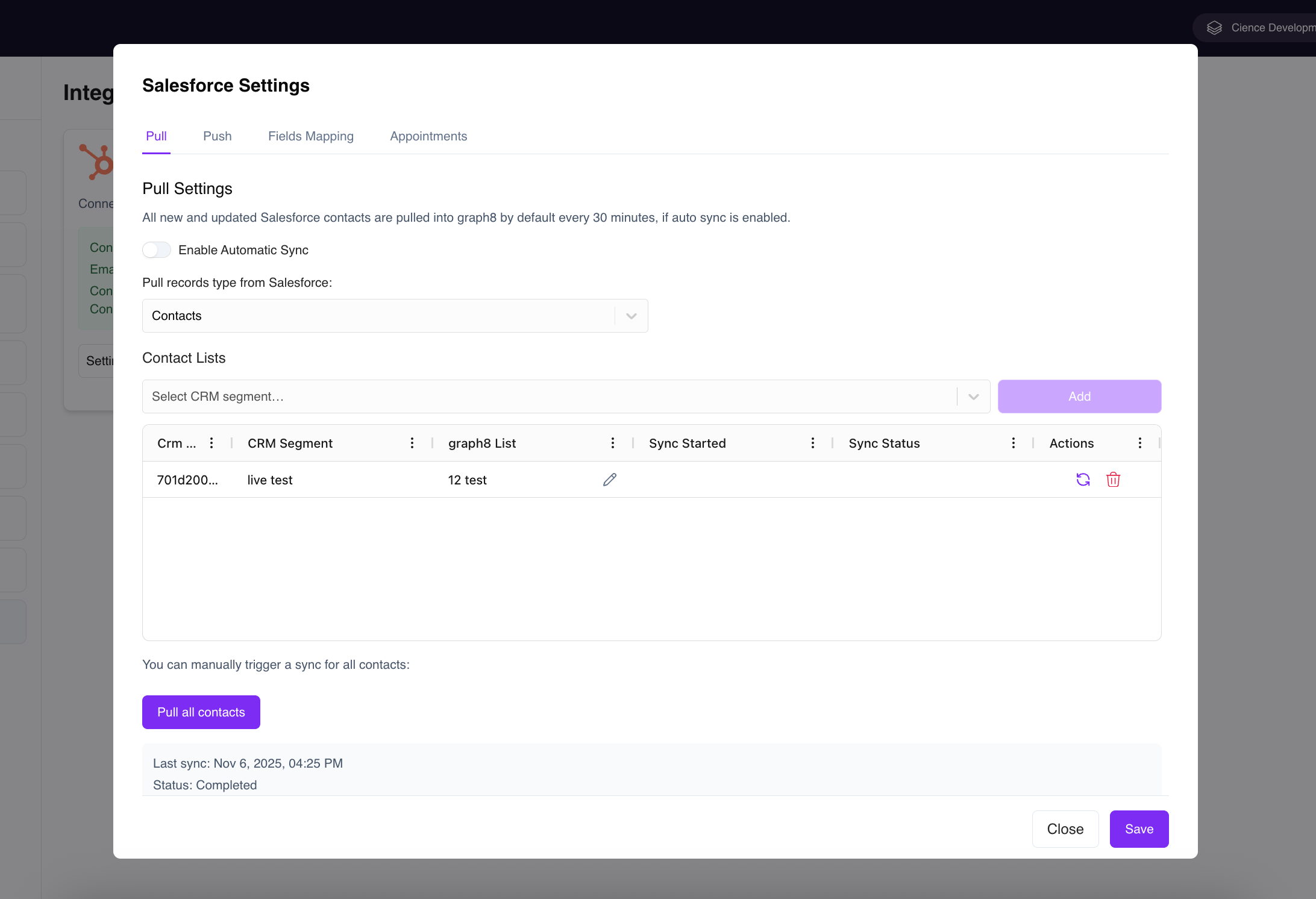
Pull All Contacts: You can manually trigger a one-time sync of all available records from Salesforce to graph8 by clicking Pull all contacts (see Screenshot 1). You will be prompted to select a destination list in graph8 (Use Existing List, Create New List, or No List).
Screenshot 1: Salesforce Pull Settings - Manual Sync
Pulling Specific Salesforce Campaigns
You can target specific Salesforce Campaigns (Segments) to pull into graph8:
From the Select CRM segment dropdown, choose one of your existing Salesforce Campaigns.
Click Add. The Campaign will be added to the table below.
Click the Pencil icon next to the graph8 List column to choose its destination: Use existing list, Create new list, or No list.
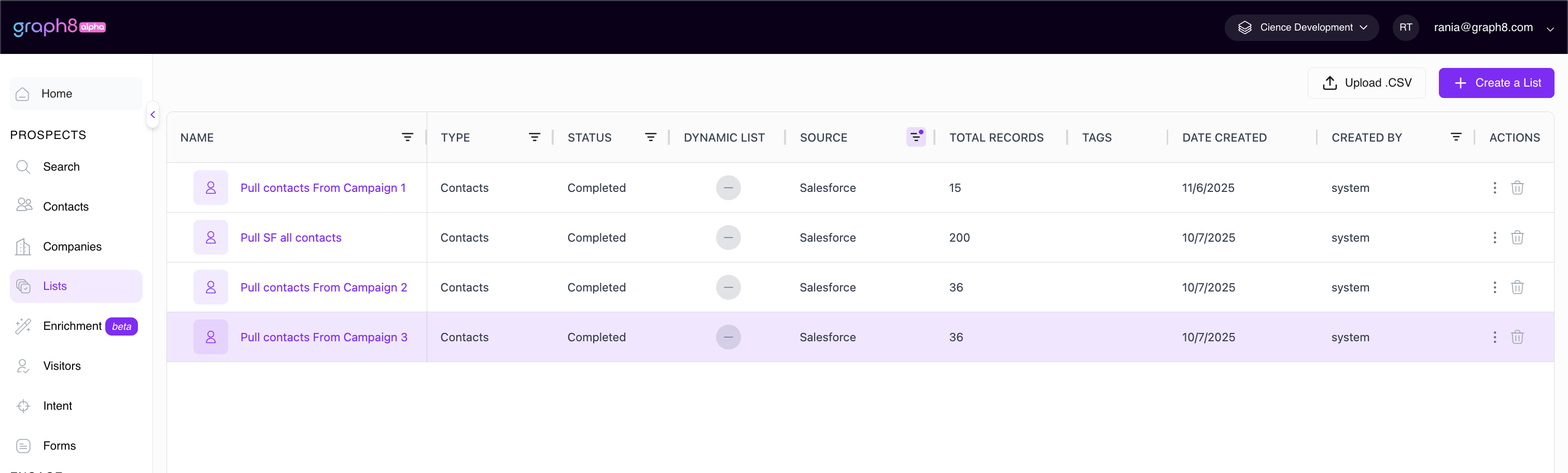
Once selected, click the Sync icon in the Actions column to manually start the sync for that campaign. The Sync Status will update, and the new list will be visible under PROSPECTS > Lists in your graph8 side menu .
2. Push Settings (graph8→ Salesforce)
The Push settings allow you to send contact records from graph8 back into Salesforce. This section is unique as it allows you to push records as either Contacts or Leads in Salesforce.
Automatic and Manual Push
Enable Automatic Sync: Toggle this on to automatically push new and updated graph8 contact records to Salesforce every 30 minutes.
Push All Contacts: You can manually trigger a one-time push of all graph8 contacts to Salesforce by clicking Push all contacts.
Pushing graph8 Lists to Salesforce (Contacts or Leads)
You can choose a specific graph8 List to push to Salesforce, and select the record type and segment:
From the Select list to sync dropdown, choose a graph8 List.
Click Add. The list will be added to the table.
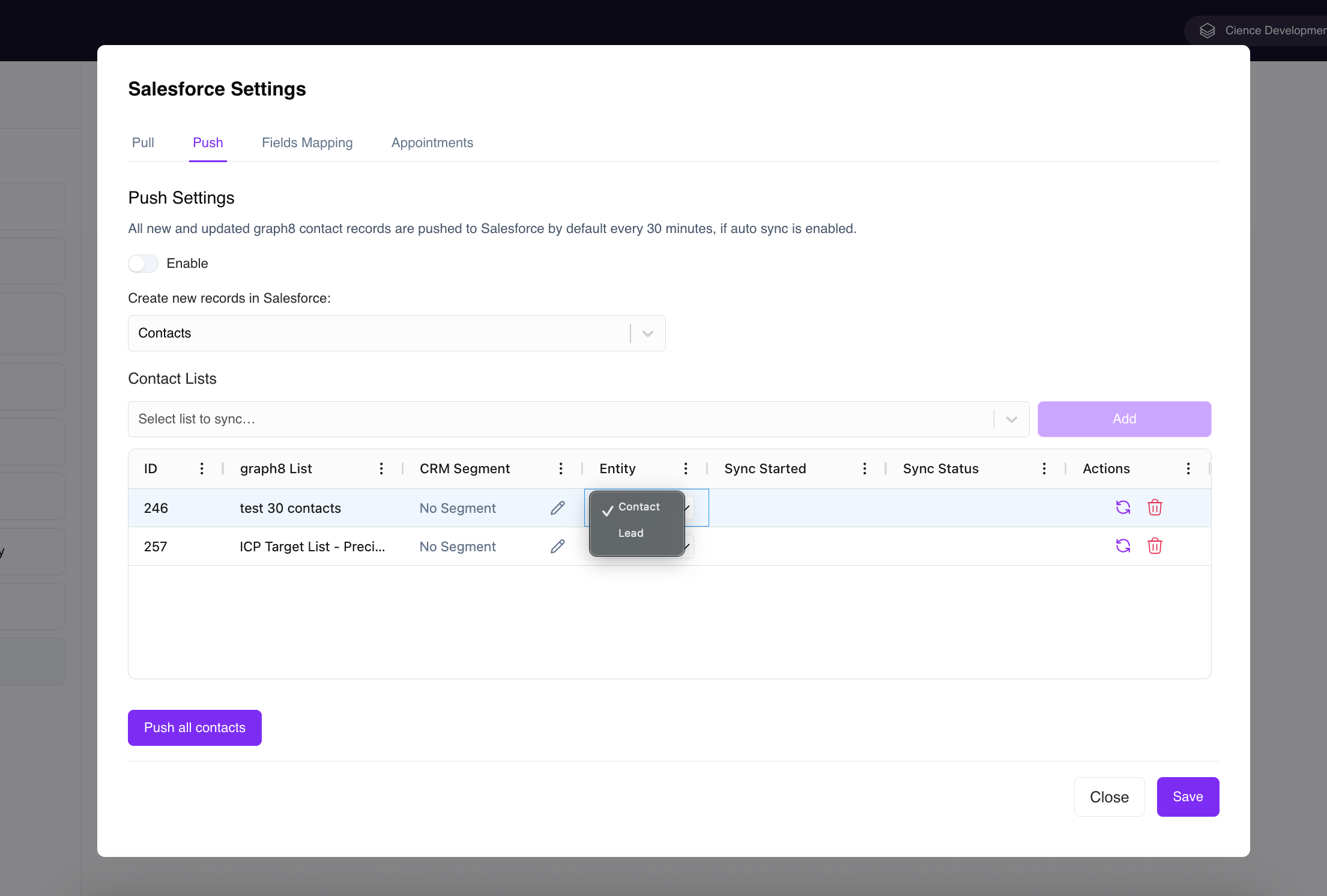
For each list, you have two key configuration options (see Screenshot 2):
Entity: Click on the Entity field to select whether the contacts in the list should be pushed to Salesforce as a Contact or a Lead.
CRM Segment: Click the Pencil icon next to the CRM Segment column to choose the destination in Salesforce:
Existing Campaign: Push records to an existing Salesforce Campaign.
New Campaign: A new Campaign will be created in Salesforce.
No Segment: The records will be added directly to the main Salesforce Contacts or Leads list, depending on the Entity chosen.
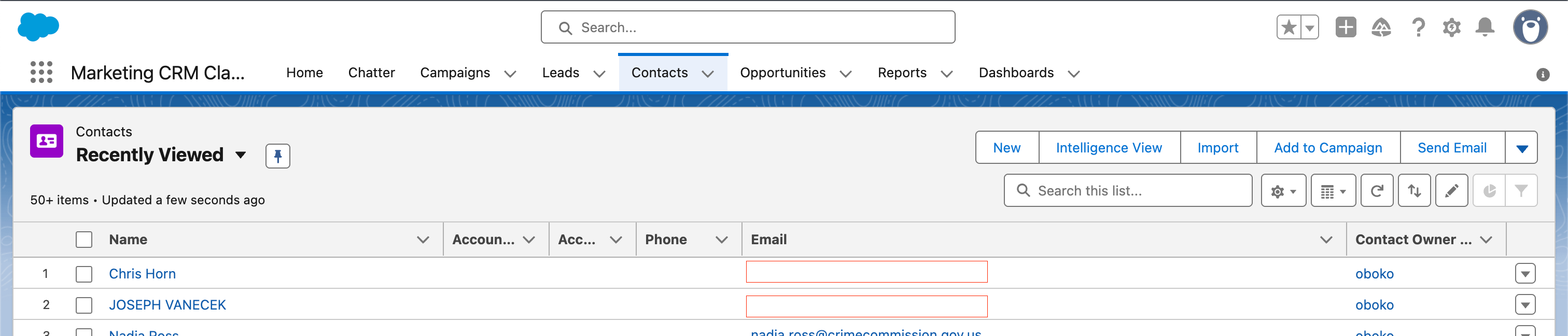
Once selected, Click the Sync icon in the Actions column to manually trigger the sync. Upon completion, the Sync Status will update, and your records will be added according to your setup: either placed into the designated Campaign (if syncing a Campaign) or added directly to the Contacts or Leads lists in Salesforce (if No Campaign was chosen, based on the selected Entity).
⏳ Note on Campaign Updates: Please be aware that occasionally, there may be a short delay between a successful push sync and the contacts / Leads appearing in the designated Salesforce Campaign. If you don't see the contacts immediately, check back in a few minutes.
📝 Important Note on Entity Type: Once a contact record has been successfully pushed to Salesforce as a Contact, you cannot subsequently push the same record as a Lead. The reverse is also true: a record initially pushed as a Lead cannot be pushed later as a Contact. The original record type established in Salesforce will prevent the creation of a duplicate record under the other entity type.
Screenshot 2: Push Settings - Entity Selection (Contact or Lead)
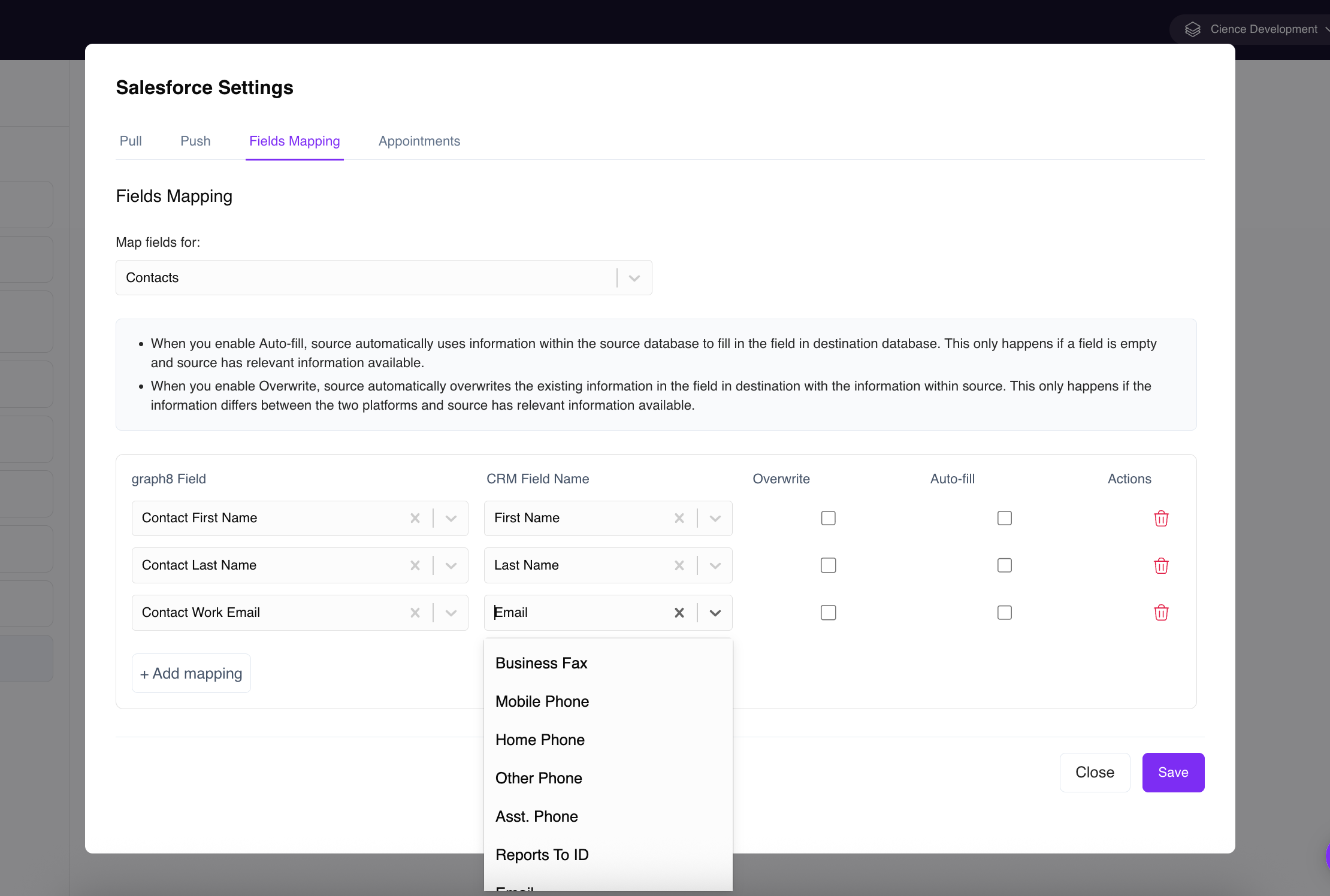
3. Fields Mapping
The Fields Mapping tab for Salesforce allow you to define the relationship between your graph8 data fields and your Salesforce fields.
You map graph8 Fields to their corresponding CRM Field Names in Salesforce.
Use the Auto-fill option to only populate empty destination fields.
Use the Overwrite option to always prioritize the source data when information differs.
4. Appointments
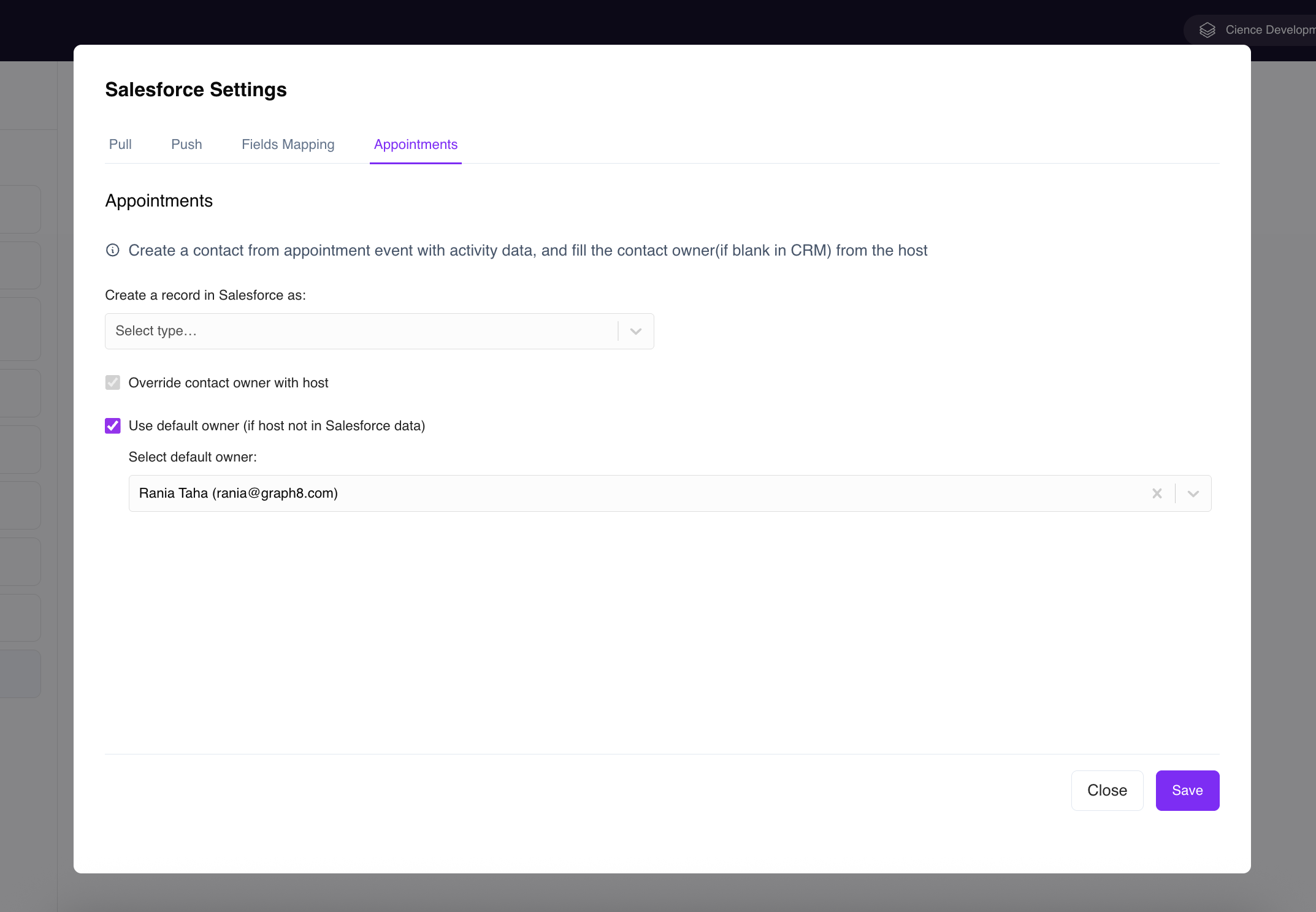
The Appointments tab manages how meeting bookings made via graph8 are recorded in Salesforce.
When a meeting is booked, an activity record is created in Salesforce.
You can configure the ownership of the new contact record:
Create a contact from appointment event...: If a new contact is created in Salesforce, the contact owner will be filled from the meeting Host (if blank in Salesforce).
Override contact owner with host: This setting ensures that the Salesforce record owner is updated to match the graph8 meeting host, regardless of the existing owner in Salesforce.
Use default owner (if host not in Salesforce data): If the graph8 meeting host is not an existing user in your Salesforce system, you can select a Default Owner to be assigned the new contact record.
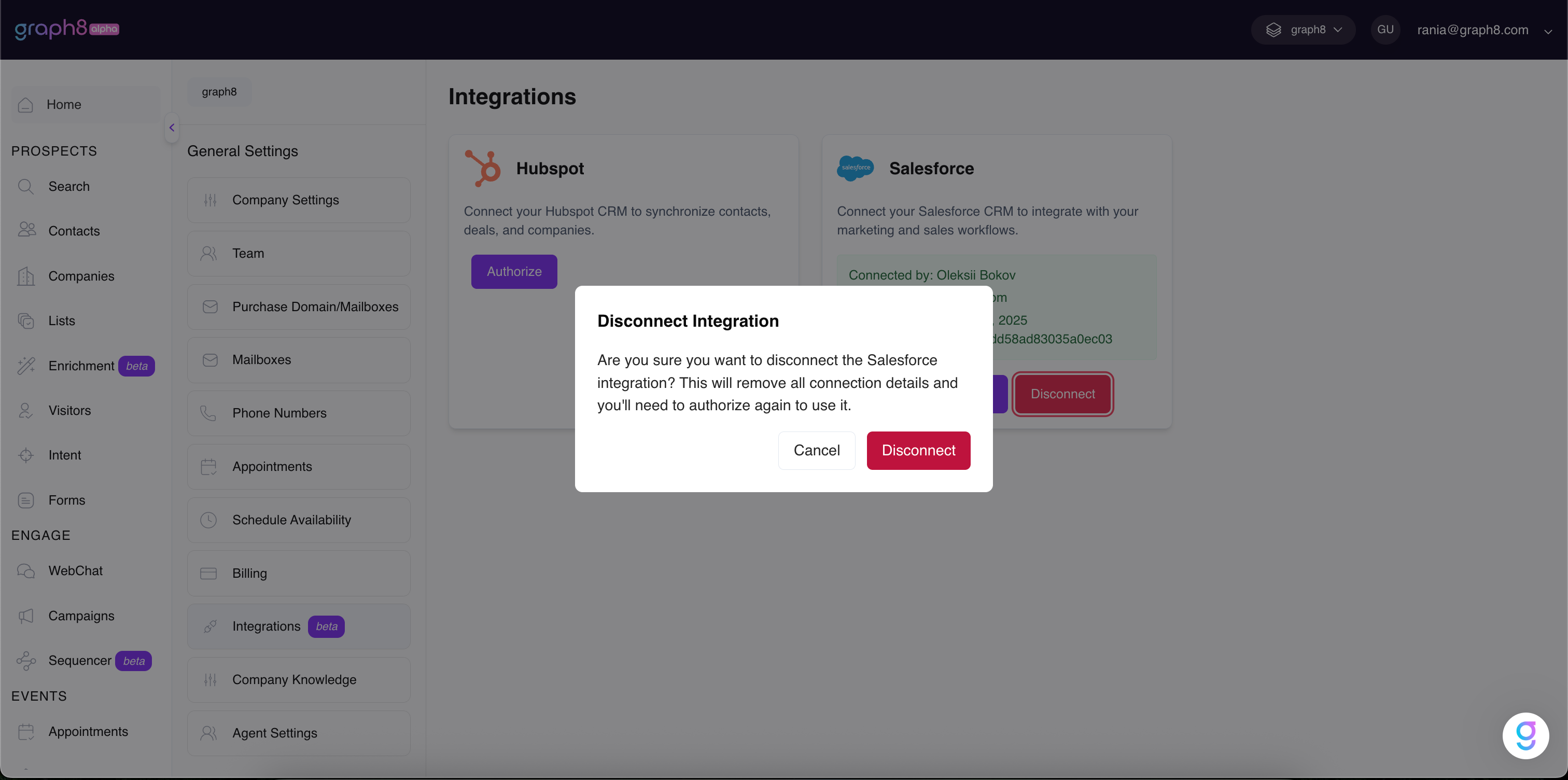
Unlink Your Salesforce Account
To unlink your Salesforce account from graph8:
Launch graph8 and navigate to Settings > Integrations.
On the Integrations page, on the Salesforce card, click Disconnect.
You have now disconnected your Salesforce account from graph8.